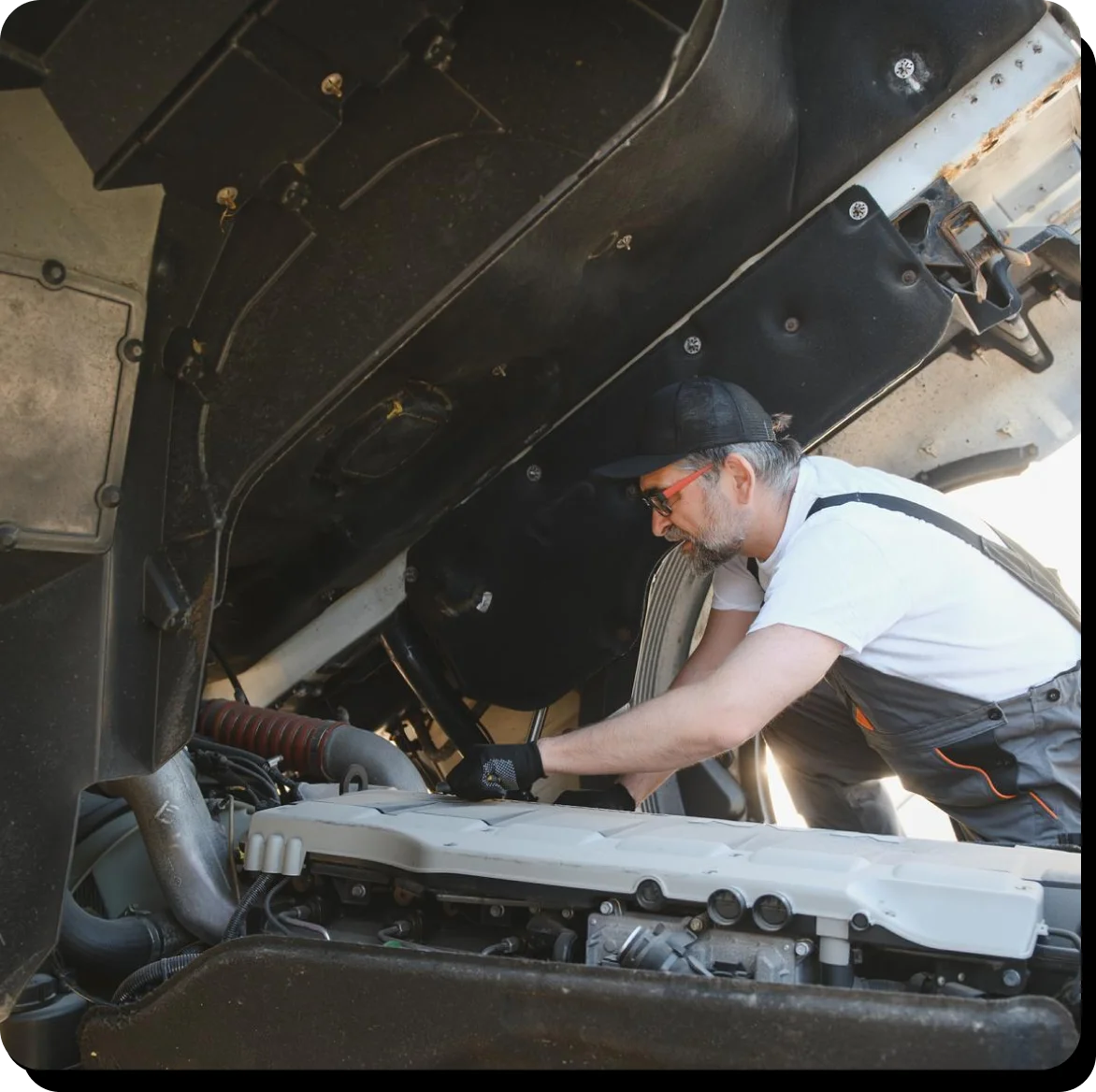
An overheating warning is a reason to get the truck safely stopped—not to guess at a radiator or try one more hill. The exact warning, temperature trend, visible coolant loss, load, grade, and recent repairs help a technician plan the next step.
In This Guide
1. Treat the Warning and Temperature Trend Seriously
If the gauge keeps climbing, the truck shows a high-temperature or stop-engine warning, steam appears, coolant is escaping, or the engine begins losing power, bring the truck to the safest available stop. Follow the truck and engine shutdown instructions rather than trying to stretch the trip.
If steam or coolant is still escaping from the engine compartment, do not raise the hood. Wait until it can no longer be seen or heard and keep clear of the hot engine, fan, coolant, and exhaust components.
If traffic or the shoulder makes stopping unsafe, call emergency services or roadside authorities for traffic protection. A repair truck does not make an unsafe shoulder safe.
2. Do Not Open a Hot, Pressurized Cooling System
Do not pour cold coolant or water into a hot engine. When the truck is cool, use only the coolant and checking procedure specified for that truck and engine. If the correct fluid or procedure is unknown, wait for service rather than improvising.
3. A Cooling Symptom Is Not a Parts Diagnosis
Coolant loss may come from an accessible hose, clamp, reservoir, radiator, pump, fitting, heater circuit, or another part of the system. Overheating without an obvious leak can involve airflow, a fan or control concern, a belt, thermostat, water pump, sensor, restricted heat transfer, engine load, or an internal problem.
A technician relates those clues to safe pressure, temperature, visual, airflow, electrical, and mechanical checks. Replacing a radiator, thermostat, or water pump from the symptom alone can miss the actual failure.
What to Tell Dispatch
- Safe location, direction of travel, and access conditions
- Truck year, make, model, VIN, and engine when available
- Exact warning wording and highest temperature shown
- Whether the temperature rose suddenly or gradually
- Steam, puddle, leak location, smell, or coolant color when visible safely
- Whether the fan was running and whether the heater output changed
- Load, grade, outside temperature, speed, and operating conditions
- Recent cooling-system work or repeated coolant additions
When Mobile Cooling Repair Fits—and When a Tow May Be Better
Mobile cooling-system diagnosis and repair can begin where the truck sits when access is safe. Hoses, belts, connections, sensors, fan-control concerns, and other accessible faults may fit mobile work depending on the truck and parts.
Active steam, an uncontrolled coolant loss, a warning that remains at the stop-engine level, suspected internal damage, an inaccessible component, or an unsafe roadside location may require a tow or facility. Dispatch confirms the safest path after the truck, warning, and location are understood.
Truck Running Hot Now?
Call with the safe location, truck and engine information, warning wording, temperature trend, and any visible coolant loss. Dispatch will confirm coverage and the next step.
Call 24/7 Dispatch: (980) 990-2722Semi-Truck Overheating FAQs
Should I keep driving a semi truck that is overheating?
No. If the temperature keeps rising, a stop-engine warning appears, steam or coolant is escaping, or the truck is losing power, bring it to the safest available stop and shut down as the manufacturer directs. Do not keep driving to see whether the warning clears.
Can I open the coolant reservoir while the engine is hot?
No. Do not raise the hood while steam or coolant is still escaping, and never open a hot, pressurized cooling system. Let the truck fully cool and follow its manufacturer procedure before checking or adding the correct coolant.
Does overheating mean the radiator has failed?
No. Coolant loss, hoses, belts, radiator airflow, fan operation, thermostats, water pumps, sensors, controls, and engine load can all be part of the diagnostic path.
Can a mobile mechanic diagnose an overheating truck?
Mobile diagnosis can begin with the warning history, visible leaks, coolant condition when safe, hoses, belts, airflow, fan operation, accessible sensors and controls, and other system checks. The repair depends on the fault, parts, location, and safety conditions.
Related Cooling and Truck Repair Pages
- Mobile cooling-system repair
- Mobile Freightliner repair
- Mobile Cummins diesel repair
- Emergency diesel repair
Official Sources
This guide uses manufacturer safety guidance. The warning behavior and service procedure for the truck in front of you always take priority.
